
Non-GMO Argentine Food-Grade Soybeans
Certified identity-preserved non-genetically modified soybeans for food production
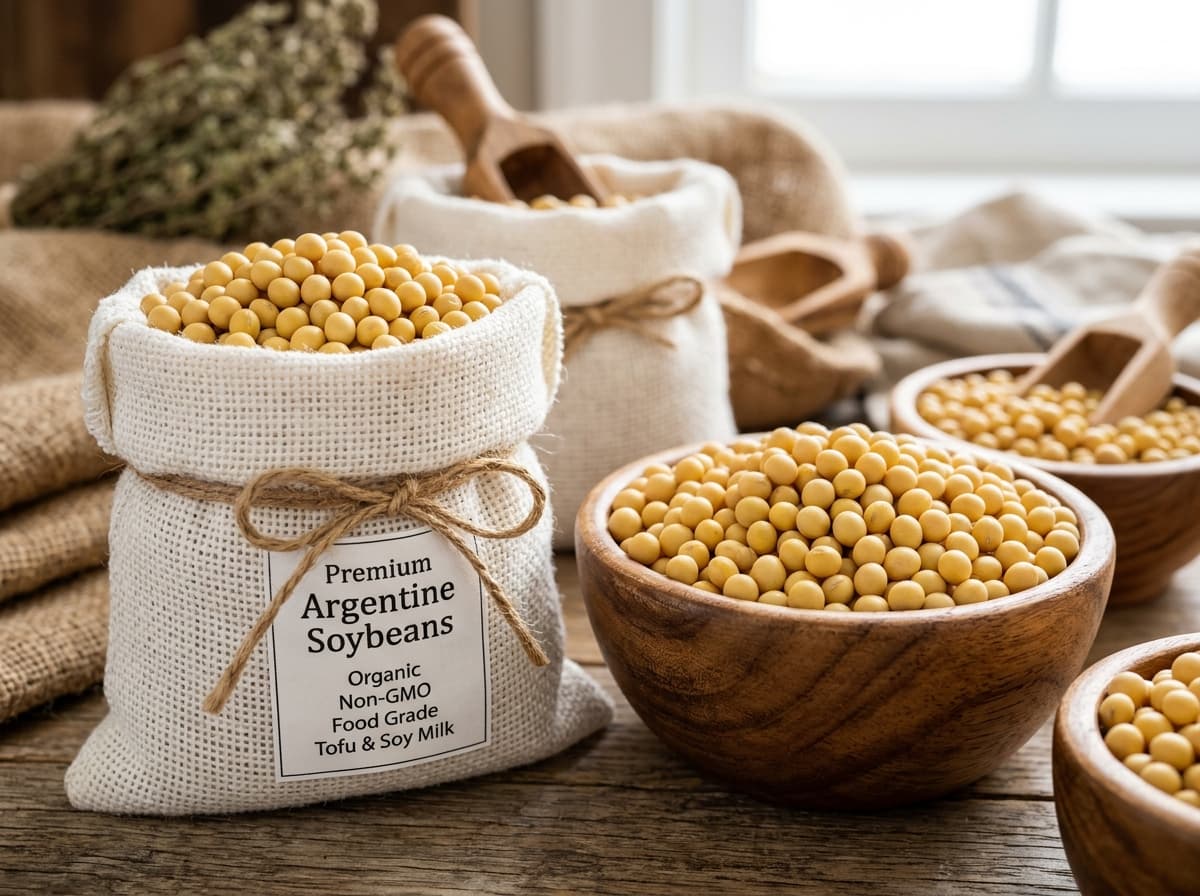
Product Overview & Commercial Role
Cultivated on dedicated contract farms in Argentina with zero chemical drift and isolated processing lines, our Non-GMO food-grade soybeans satisfy the strictest quality criteria of Asian, European, and Middle Eastern food processors. With bright, uniform grain sizing, clean golden hilum, and elevated soluble protein percentages, this grain delivers high yields in tofu production, soy milk beverages, fermented foods (miso, natto), and hydrolyzed vegetable protein. Full traceability from planting seed variety to export container loading ensures complete non-GMO integrity.
Verified Technical Specifications
| Genetic Status | 100% Non-GMO (PCR tested, <0.1% or <0.9% threshold per contract) |
| Protein Content | 36.0% – 38.5% min |
| Moisture Content | Max 12.5% – 13.0% |
| Foreign Matter | Max 1.0% (optical sorted available) |
| Hilum Color | Clear / Golden Yellow (Food-grade visual appeal) |
| Broken / Splits | Max 5.0% – 8.0% |
| Defective Kernels | Max 1.5% |
| Contaminant Screening | Aflatoxin & Heavy Metals within strict CODEX limits |
All cargo parameters are confirmed via official load-port surveying certificates in compliance with Argentine SENASA export standards.
Commercial & Processing Applications
- Soy milk and plant-based dairy beverage production
- Artisanal and industrial tofu processing
- High-protein soy flour, isolates, and textured vegetable protein (TVP)
- Traditional fermented soy foods (tempeh, miso, soy sauces)
Export Packaging & Shipping Modalities
- •50 kg multi-ply PP woven export bags with inner liner
- •1,000 kg PP Big Bags / Jumbo Bags with discharge spout
- •20ft / 40ft FCL containerized sea-bulk liners
100 Metric Tons (approx. 4 x 20ft FCL)
Frequently Asked Technical Questions
What are the primary specifications of Argentine soybeans exported by United Saud Argentina?
Our standard export-grade Argentine yellow soybeans typically feature a protein content between 34% and 36%, maximum moisture of 13.5%–14%, maximum foreign matter of 2%, and high oil content (~18.5%–20%), making them ideal for crushing and industrial extraction. We also supply certified Non-GMO food-grade varieties (up to 38% protein, <1% foreign matter) and animal feed-grade parcels as contracted.
Do you supply both GMO and Non-GMO Argentine soybeans?
Yes. In Argentina, commercial grain production includes both standard biotechnology-derived (GMO) soybeans favored by crushers and feed millers globally, as well as identity-preserved, segregated Non-GMO soybeans with PCR testing validation for human food manufacturing, soy milk, and specialty markets.
From which ports in Argentina do you ship?
Our primary shipping origins are the deepwater river ports along the Paraná River waterway—specifically the Rosario and San Lorenzo / Puerto General San Martín hub—where the majority of Argentina's grain terminals are concentrated. For larger drafts and Atlantic maritime routes, we also coordinate loadings through the deepwater ocean ports of Bahía Blanca and Quequén/Necochea, as well as containerized FCL shipments from Buenos Aires.
Commercial Quotation
Direct from Argentine DeskReceive indicative FOB (Rosario / Bahía Blanca) or CIF pricing for Non-GMO Argentine Food-Grade Soybeans according to current CBOT/Rosario market spreads.